

You open your banking app to check your balance before payday, and there it is: an overdraft fee you didn't see coming, sitting on top of a balance that was already tight. Your first thought is probably that this is just how it works now, a cost of doing business with your bank. It isn't.
If you want to know how to get overdraft fees waived, the short answer is that you ask, specifically, clearly, and soon after the fee posts. Banks reverse these charges more often than most people realize. You just have to know what to say and who to say it to.
This same approach works on a late fee, whether it's a credit card payment that posted a day past the due date or a loan payment that slipped through the cracks. The tactic is the same: call, explain briefly, and ask for a one-time courtesy reversal. Nobody can promise you a yes. But plenty of good-standing customers get one, simply because they didn't realize the fee was negotiable in the first place.
Why Fees Like This Are Still Around
You might remember hearing that overdraft fees were about to be capped. They were, on paper. The Consumer Financial Protection Bureau (CFPB) finalized a rule in December 2024 that would have capped bank overdraft fees at $5 for large financial institutions. That rule was repealed through a Congressional Review Act resolution signed into law on May 9, 2025, and it never took effect.
A similar thing happened with credit card late fees. In March 2024, the CFPB announced a rule that would have dropped the typical late fee from $32 to $8 for major card issuers, projected to save more than 45 million people an average of $220 a year. A federal court in the Northern District of Texas vacated that rule in April 2025, and the CFPB's own final-rule status page confirms it remains stayed and never took effect.
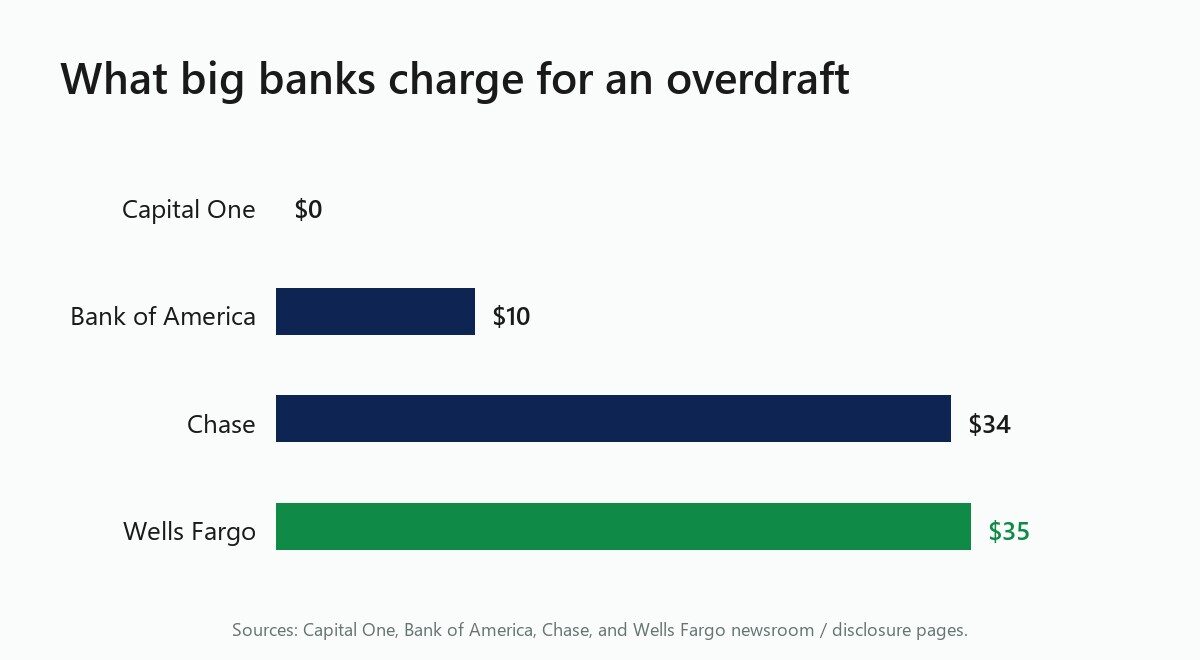
Typical credit card late fees today still sit in the $30 to $41 range, per that same CFPB rule page. Overdraft fees still vary by bank: as high as $37 per item at some banks, according to the CFPB's 2023 overdraft and NSF revenue data spotlight, down to $10 at banks that have cut them. No federal cushion is coming for either fee type right now. That makes asking for a reversal yourself one of the few levers still in your hands.
Why Banks Waive Fees More Often Than You'd Think
Here's the part that surprises people: banks have a real financial reason to let you off the hook for an occasional fee. Combined overdraft and non-sufficient funds (NSF) fee revenue reported by banks in 2023 came in at over $5.8 billion, down more than 50% from pre-pandemic levels, per the same CFPB data spotlight, published April 24, 2024. An NSF fee is what a bank charges when a payment is rejected outright for lack of funds, rather than paid and then charged an overdraft fee.
The bigger detail is where that money actually comes from. Nearly 80% of combined overdraft and NSF fees are paid by fewer than 9% of accountholders, the group with more than 10 overdrafts a year (same CFPB Data Spotlight). If that's you, waiving this fee isn't going to be an easy ask.
But if you're an occasional overdrafter with a track record of keeping your account in decent shape, you're not the customer the bank is trying to protect that revenue from. Letting you slide on one fee costs the bank almost nothing, and it keeps you as a customer. A long relationship with a bank, even a modest one, tends to carry more weight in that decision than people expect.
None of this means you're entitled to a waiver. No federal law requires a bank to reverse a fee, first-time or otherwise. What you're asking for is discretionary goodwill, sometimes called a courtesy reversal or one-time forgiveness internally, and it's granted case by case, agent by agent. Treating this as a negotiation instead of a right changes how you approach the call, and it usually gets better results too.
Which Fees Are Actually Waivable (and Which Aren't)
Not every fee has equal odds of getting reversed. Here's a general sense of where you stand:
- Usually waivable once: a single overdraft fee, a single NSF fee, or a single late payment fee, especially on an account in otherwise good standing with no recent history of the same issue.
- Harder to get waived: a fee tied to a pattern of repeated overdrafts or repeated late payments in a short window. The bank sees a pattern, and courtesy reversals exist for isolated situations.
- Rarely waivable: wire transfer fees, fees tied to a specific service you opted into, and fees on accounts already flagged for a pattern of overdrafts. These are treated as priced-in costs, not goodwill situations.
Good standing typically means your account isn't currently overdrawn, you don't have a string of returned payments from the last few months, and this fee is either the first of its kind or close to it. None of that is written down anywhere as an official policy. It's simply what the person on the other end of the call is quietly checking before they decide whether to say yes.
If overdrafting has become a regular thing rather than a one-time slip, and it's tied to income that doesn't land the same amount on the same day every time, that's worth solving at the root. If irregular income is why you keep overdrafting in the first place, working out a budgeting system built for a different paycheck every time closes that gap faster than any phone call will.
The Phone Script That Works
Before you call, get a few things in front of you. This keeps the call short and makes you sound organized, which matters more than you'd think when you're asking someone for a favor.
- Your account number, ready to read off without digging.
- The exact date and dollar amount of the fee you're disputing.
- A rough sense of how long you've been a customer.
- A short, honest reason for what happened. You don't need an elaborate story.
Timing matters too: ask soon after the fee posts. Once you're connected to a representative, here's a template you can adapt to your situation. This is a customer-advocacy template, not an official bank procedure, and no outcome is guaranteed. It reflects a structure that tends to work: identify yourself, name the specific fee, note your account history, and ask directly.
"Hi, my name is [Name], and my account number is [account number]. I noticed a [$XX] [overdraft/late] fee posted on [date]. I've been a customer for [X years/months] and this isn't something that happens often on my account. Is there any way you're able to waive or reverse this fee as a one-time courtesy?"
If the agent asks why it happened, keep your answer short and honest: "I miscalculated a payment timing" or "an automatic payment posted earlier than I expected" both work fine. Over-explaining doesn't help your case, and it eats up time you don't need to spend.
The chat/email version
If you'd rather not call, or the bank's app makes it easy to message support directly, a shorter written version works too. It's the same ask, just condensed for text:
"Hi, I was charged a [$XX] [overdraft/late] fee on [date]. I've been a customer since [year] and this is the first time this has happened on my account. Could you waive this fee as a one-time courtesy? Thank you."
Keep it polite, specific, and short. A wall of explanation doesn't move a written request any faster than a phone call, and it's easier for the person reading it to say yes to something simple.
When The First Answer Is No
Getting told no on the first try doesn't mean the conversation is over, so it's worth asking whether someone else can take a second look.
Here's how to work your way up the chain without getting combative about it.
- Ask for a supervisor. A simple, polite request works: "I understand. Could you connect me with a supervisor, or is there someone else who can review this?"
- Bring up your tenure and standing. If you've banked there for years without this kind of issue, say so again to whoever you're escalated to. Loyalty is one of the few things a bank actually weighs when deciding whether to bend.
- Mention what other banks are doing, factually. Bank of America eliminated NSF fees entirely starting in February 2022 and cut its overdraft fee from $35 to $10 starting in May 2022, according to a Bank of America newsroom announcement. Capital One went further and eliminated all consumer overdraft and NSF fees entirely, effective January 13, 2022, becoming the first top-10 U.S. retail bank to do so. Customers there who haven't opted into overdraft coverage simply have the transaction declined for free instead of charged a fee. You can reference this as leverage, not a threat: "I want to stay with [Bank], but I know [competitor] doesn't charge this fee at all anymore. I'd like to see if there's something you can do before I look at other options."
This escalation ladder is also why calling beats emailing when the first attempt doesn't work. A phone call gets you a live path to a supervisor in the same conversation. A written request usually means waiting for a reply and starting the escalation over from scratch.
If your overdrafts keep happening because you're leaning on cash advance apps to cover the gap between paychecks and still coming up short, it's worth stepping back and looking at whether that pattern is actually solving the problem or just delaying it.
If They Still Won't Budge, It's Time to Switch
Sometimes the answer stays no, even after a supervisor gets involved. At that point, you're not stuck. Some of the largest banks in the country have already moved away from these fees entirely.

Bank of America cut its overdraft fee to $10 and dropped NSF fees completely, and Capital One dropped overdraft and NSF fees to zero across the board. Other banks, including Chase and Wells Fargo, still charge overdraft fees but build in a grace period. Chase's Overdraft Assist applies automatically on most personal checking accounts, with no enrollment required, and gives you until 11 PM ET the next business day to fix a balance overdrawn by more than $50 before the $34 fee applies, capped at three fees a day. Wells Fargo's Extra Day Grace Period works the same way: automatic, no enrollment needed, giving you until 11:59 PM ET the next business day before its $35 overdraft fee posts, also capped at three fees a day.
There's also a middle-ground option if overdrafting has turned into a pattern rather than a one-time event. Bank of America's SafeBalance is a checking account built with no overdraft fees at all, and Balance Assist is a short-term advance of up to $500 for a flat $5 fee, both detailed in the same Bank of America newsroom announcement. Neither undoes a fee you already owe, but either one narrows the odds of the next one.
If your bank still won't budge, picking a no-overdraft-fee account deserves serious consideration rather than any guilt about giving up on your current bank. How to actually pick one is its own decision with its own tradeoffs, but knowing the option exists changes how much leverage you carry into that conversation in the first place.
Frequently Asked Questions
No. Asking your bank to reverse an overdraft, NSF, or late fee is simply a customer service request. It doesn't trigger a credit inquiry, and it never appears anywhere on your credit report. Your credit score stays exactly where it was before you called.
There's no fixed limit written anywhere, but courtesy reversals work best for occasional situations instead of a repeat pattern. Asking every month starts to look like a habit rather than an isolated request. This is discretionary goodwill each bank grants case by case, not a right you're guaranteed to get.
Not officially, and not in writing at most institutions. It's an internal, discretionary practice instead of a published policy, which is exactly why asking directly matters. No federal rule requires any bank to offer it. Some banks refer to it internally as a courtesy reversal or one-time forgiveness, and it usually is not written into any customer-facing policy.
A fee waiver reverses a specific charge, like an overdraft or late fee, already posted to your account. A goodwill letter is a different request: it asks a lender to remove a late payment mark from your credit report. They solve separate problems through separate channels, so don't confuse one for the other.